
THE JACKSON TWO
The Peoria couple made music of a different kind

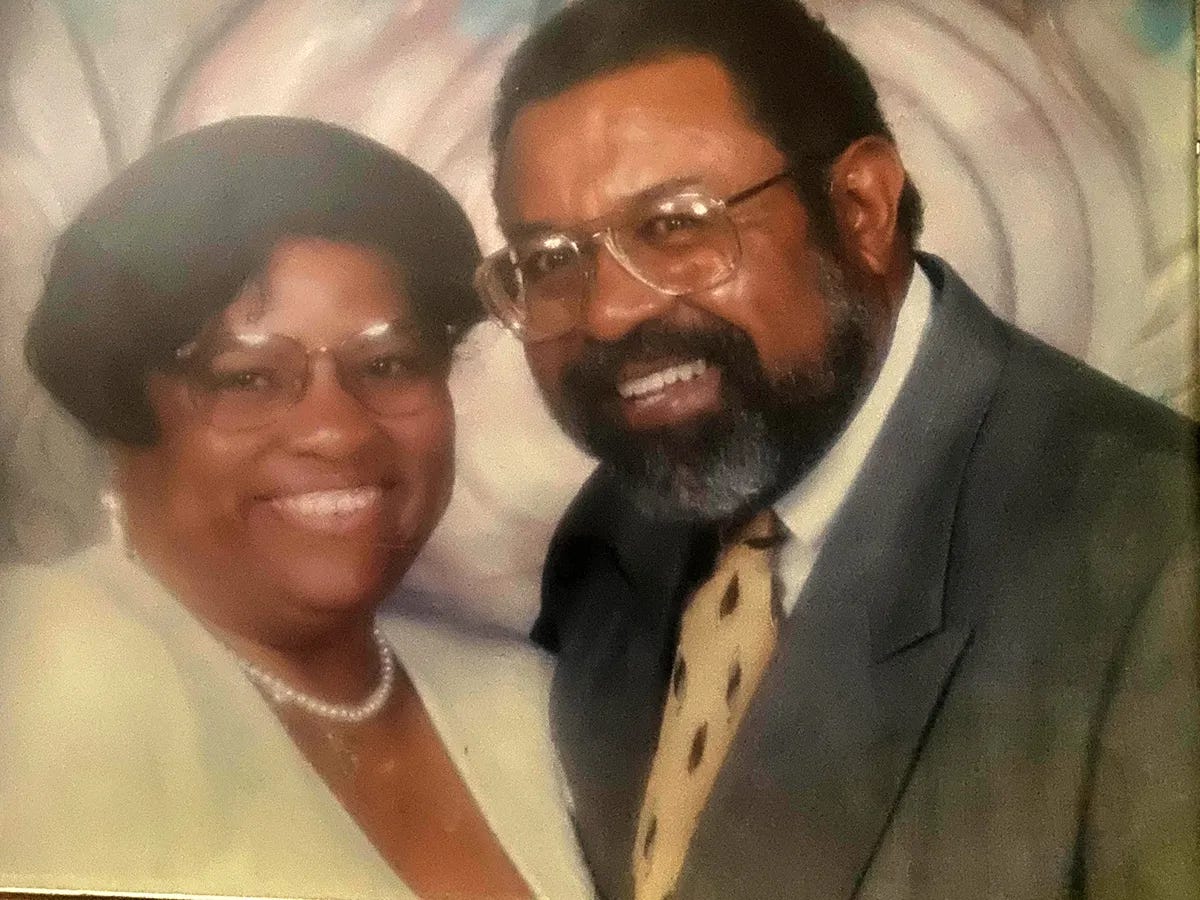
The recent passing of Don Jackson at the age of 86 must be marked in the record when it comes to the struggle for civil rights in Peoria.
Along with his wife, Ernestine, who died in 2023 at the age of 83, the couple—married in 1961—devoted their lives to the pursuit of equality in central Illinois.
Donald R. Jackson was an attorney for 50 years, serving as president of the Peoria branch of the NAACP for two decades (along with a seven-year stint as head of the NAACP’s state office) while Ernestine, who also served in various capacities for the NAACP, became the first director of fair employment and housing for Peoria, assistant to the city manager for Champaign, director of diversity for CILCO, a personnel officer for the University of Illinois, human relations director for Bloomington and the Equal Opportunity Director for Bloomington. Then, at age 75, she served on the Peoria school board.
To say that the Jacksons were a force in central Illinois would be putting it mildly.
I had the occasion to interview Don Jackson at his Downtown Peoria law office for an article about the NAACP that ran in the January 2023 issue of Peoria Magazine.
He graciously chose to give the spotlight to John Gwynn, the NAACP head in Peoria in the 60s and 70s, and Harry Sephus, who led the Peoria NAACP before Gwynn, as the “true pioneers.” “The groundwork was done when I came to office,” said Jackson, who took over the NAACP branch in 1995.
While Gwynn earned the title of firebrand for his combative approach to breaking the color barrier that existed in Peoria, Jackson performed in quieter times—but was no less determined in his support of civil rights. "You hear about all of the things Dad did over the years," his son Dale told the Peoria Journal Star. "African-American police officers are sergeants and lieutenants because Dad sued the police department. A lot of African-American women are in the construction field because of Dad way back in the day."
Jackson’s family history reveals a passion for establishing equality in Peoria. His great-grandfather, Henry Gibson, served as a Peoria police officer and became the city's first Black elected official in 1898, while also laying one of the first blows for civil rights in 1904. That year, Gibson went to the segregated Main Street Theatre and tried to get a seat on the bottom floor, where only whites were allowed. Unsuccessful in being seated, he filed suit against the theater, with a jury awarding him $25.
While winning the suit, he lost reelection for city constable the next year. Gibson reportedly later shot himself and died.
The matter of where one sits in the theater came up again years later when I greeted Ernestine Jackson at the Apollo Theater in Downtown Peoria almost 20 years ago during the first Richard Pryor film festival.
The Apollo Theater closed in 1958 but was restored to life by Tom and Barb Leiter in 1991 when the balcony was restored to form a mini-theater seating 150 people. For many years, Bob Brandes managed the theater. From 2005 to 2013, I headed up a group that put on old movies at the Apollo.
When Ernestine came in, I met her in the lobby and went into my standard pitch about the Apollo’s history. I told her the main theater was replaced by the Niagara parking deck and now the theater was to my right, motioning to stairs that led the way to the balcony.
“Oh, we’re very familiar with the balcony. That used to be the only place we could sit,” she said, describing unwritten rules that applied to African American moviegoers still existed when she was growing up in Peoria.
She had a better handle on local history than I did. The progress that’s part of that history has thankfully been shaped due to the efforts of people like her and her husband.